Implementing Eco Friendly Energy Optimised Power Networks on Music Festival Sites.
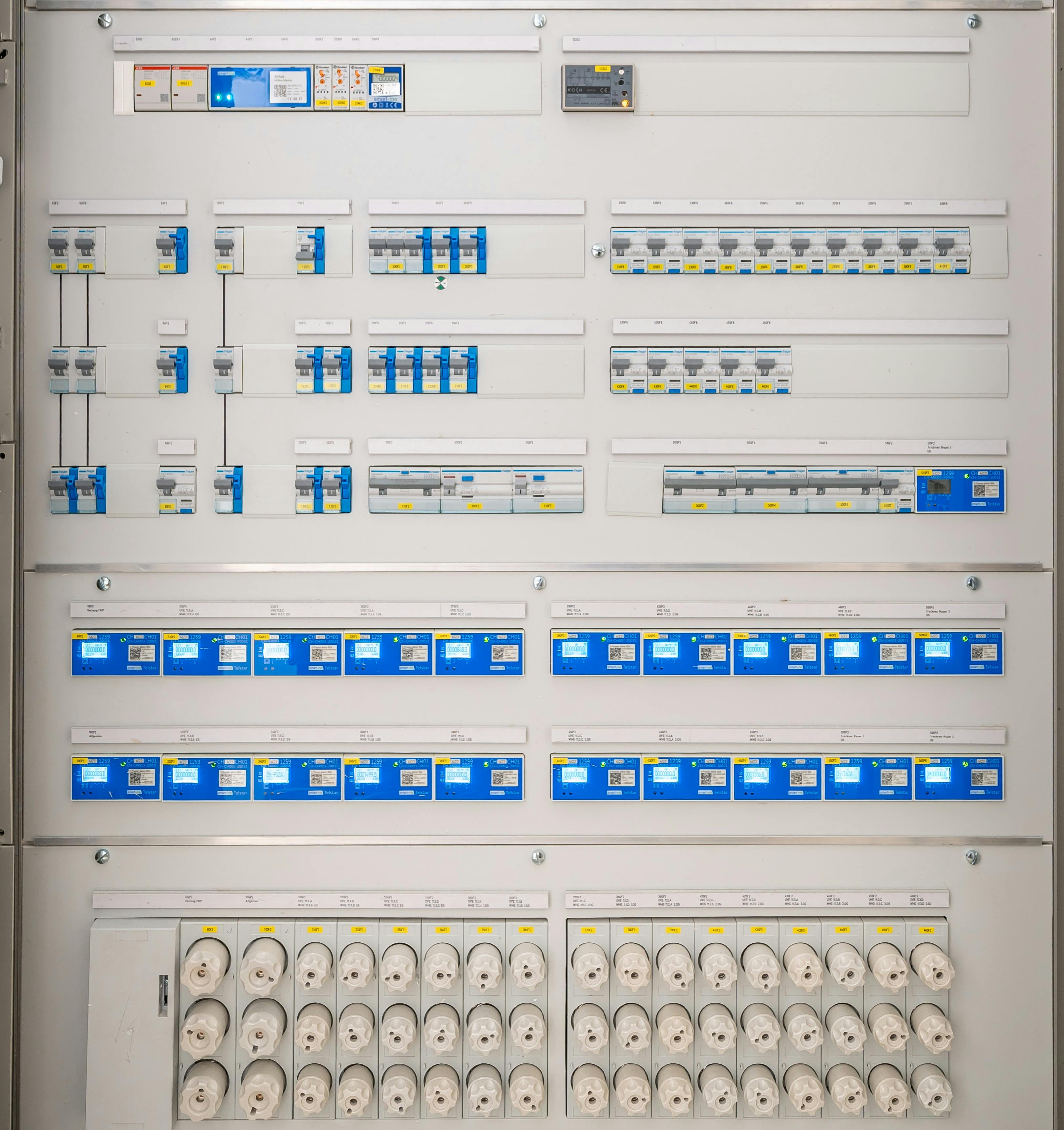
For any music festival operating on a remote greenfield site, the need for local power generation is essential. Festivals are traditionally power-hungry events, and the use of diesel generators is transitioning to cleaner fuels. The latest developments have a greater focus on optimising power networks to make intelligent use and distribution of available power.
The raw power needed for a large, amplified speaker stack can be huge where powerful generators are often the only option to supply the ‘juice’ required. The addition of large high-resolution screens (LED walls) are also being used at sizable festivals to enhance the festival-goer experience increasing the demand for even more power. To make their power generation more sustainable organisers have moved away from diesel to eco-friendly fuels but the available technology is now allowing a more intelligent approach. More organisers are now utilising smart microgrids to optimise power distribution where high surge demands are balanced with renewable harvesting. What do organisers need to know about this new approach to power network optimisation and the impact on sustainability.
Traditional Power Supply.
Music festivals have been using diesel generators for decades because they are reliable, inexpensive to operate and provide great power output. As governments and jurisdictions implemented policies that moved away from fossil fuels and towards more sustainable alternatives, festival organisers had to re-think their power supply. In recent times many organisers have switched to cleaner low carbon fuels like HVO (Hydrotreated Vegetable Oil) which can still be used in diesel generators. Other solutions have been the emergence of hydrogen powered generators which provide similar power outputs to diesel generators.
Transitioning to Eco-friendly Solutions.
In an effort to meet their sustainability objectives some festival organisers have introduced greater use of solar and wind power for their events but this is often only suitable for low energy consumption needs like site lighting. for example. These solutions only replace the source of power to be more eco-friendly; the emerging developments are geared to optimising how power is generated and used. In order to take advantage of new technological developments, organisers must first accurately map their anticipated energy demand (smart mapping). This would typically mean breaking up site zones into profile load types where demand may or may not surge, and historical data can sometimes indicate likely peak and baseline demand curves for each zone. Assuming that organisers are using a combination of diesel generators (using HVO), solar arrays and wind turbines, engineers need to build a hybrid architecture which can be used as a microgrid. Organisers can also mandate energy efficient LED lighting sitewide like pathways, camping zones and vendor zones; this helps to reduce overall demand.
Emergence of Smart Grids.
Festival organisers are increasingly using this collection of isolated generators as a unified energy network, which is possible because of greater use of smart technology. In order to operate effectively, a smart grid needs to incorporate a Battery Energy Storage System (BESS) which enables energy storage and distribution. AI software can now monitor power needs in real time and divert battery power to other zones which can reduce generator idle time by up to 40%. The software can also schedule pre-loading of a BESS which prevents large voltage sags that can damage equipment. An Intelligent Management System enables real-time load monitoring, automated generator power up and a remote-control dashboard for additional operator control.
Building an Optimised Power Grid.
The key to optimising a power grid is the effective use of a BESS which enables the storage of excess solar power generation and the silent running of night-time camping zone lights. The largest capacity battery packs should be reserved for high impact zones like stages and production facilities. Implementing an optimised distribution network requires the appropriate use of shortened cabling runs and designing ring mains rather than radial layouts. A well planned and specified power network infrastructure avoids the need to build in oversizing (just in case) and incorporating data like expected attendance and weather balanced with real time usage can help to reduce emissions and costs. A perfectly optimised power grid would typically be using 50% from solar and battery sources and 40% from the HVO generators with the balance from the harvested smart grid.
Implementation Challenges.
An optimised power network needs to be monitored in real time to check for load spikes, generator idle time, and battery charge cycles. If the data does not match planned expectations, changes will be required. Analysis of data like kWh per festival-goer, fuel consumption vs. baseline and generator runtime reduction can help build knowledge for future events. As this requires the use of emerging technology, contractors and suppliers are still learning how to effectively deploy optimised smart power networks that reduce overall consumption and costs whilst being eco-friendly too.
For festival organisers planning their next event using a software management platform like Festival Pro gives them all the functionality they need manage every aspect of their event logistics. The guys who are responsible for this software have been in the front line of event management for many years and the features are built from that experience and are performance artists themselves. The Festival Pro platform is easy to use and has comprehensive features with specific modules for managing artists, contractors, venues/stages, vendors, volunteers, sponsors, guestlists, ticketing, site planning, cashless payments and contactless ordering.
Image by smart-me AG via Pexels
<< Back to articles
Contact us
Get in touch to discuss your requirements.
US: +1 424 485 0220 (USA)
UK: +44 207 060 2666 (United Kingdom)
AU: +61 (2) 8357 0793 (Australia)
NZ: +64 (0)9887 8005 (New Zealand)