Music Festival Site Nighttime Lighting Infrastructure.
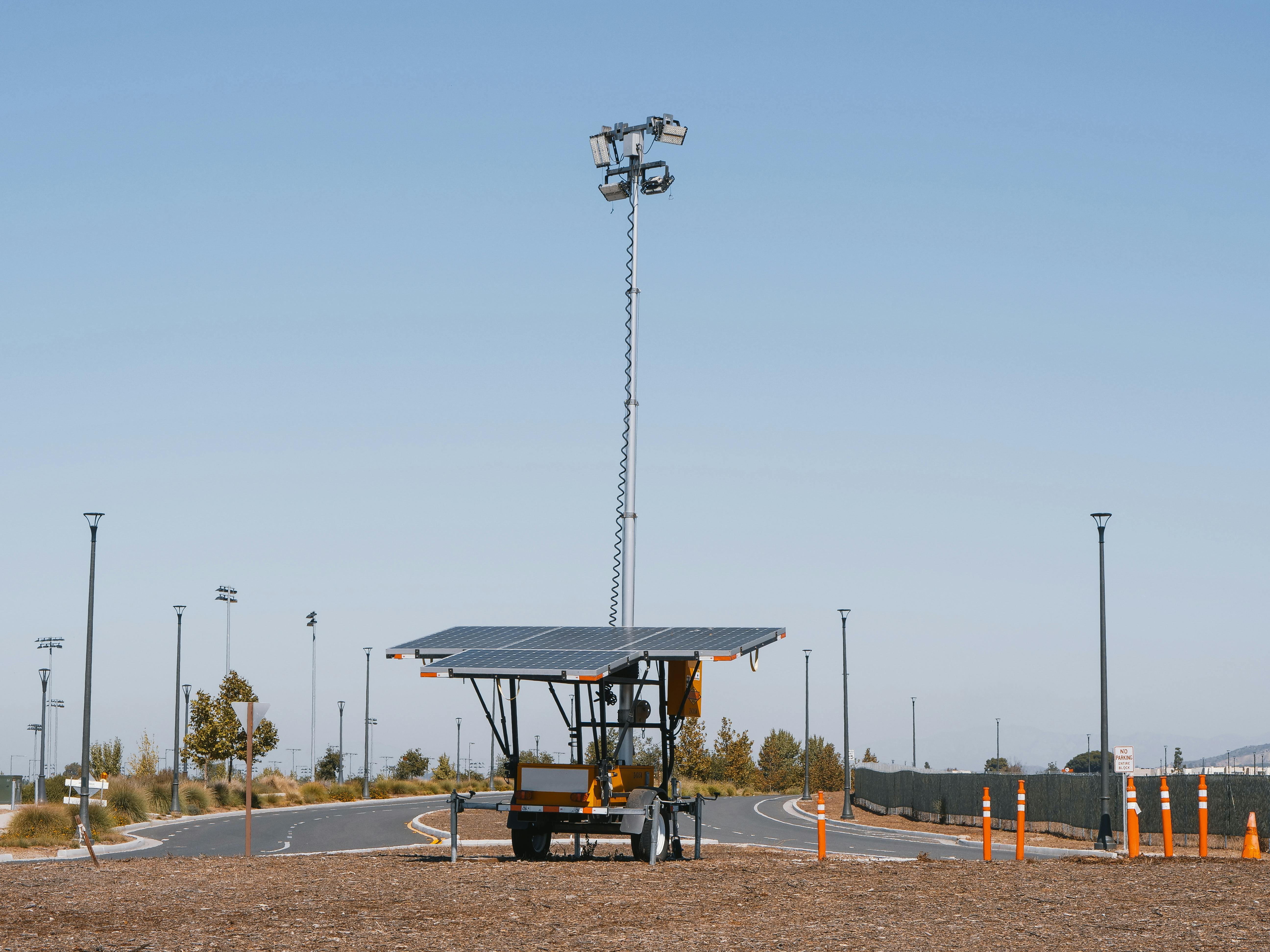
A music festival taking place on a greenfield site over several days must make allowances for lighting in hours of darkness. This is a key safety requirement of any large event taking place after dark and ensures that operational tasks can continue to be performed. Good lighting also ensures that festival-goers feel comfortable being on site at nighttime.
Organisers have a responsibility to provide effective nighttime lighting on festival sites as part of their risk mitigation and operational control procedures. Poor lighting can increase the incidence of trips and falls and other security risks, good lighting helps to improve crowd flows and the perception of safety. Organisers must also consider the zoning and types of lighting used throughout a site as well as any sustainability implications.
The Importance of Nighttime Lighting.
There are safety standards and legal compliance considerations that organisers must take into account when planning their site lighting. Under Martyn’s Law, organisers are responsible for areas outside perimeter fencing and often implement CCTV to detect any threats. Good lighting in these areas supports the operation of high-resolution CCTV cameras. Installation of lighting systems must comply with the IEC 63494-1:2026 standard which prevents grounding and electrical fires. Lighting is used for wayfinding around a festival site at night when festival-goers are moving from stage performance areas to camping zones, for example. Back stage areas require sufficient lighting at night to allow staff and crew to operate safely.
Zoning Festival Site Lighting.
The types of lighting used throughout a festival site can vary depending on the zone being illuminated. A high traffic area with high safety risks would usually requires bright uniform lighting with power redundancy built in. Typically, the zones that need this type of lighting would be entrance and exit gates, medical facilities and security checkpoints, for example. For food and beverage or toilet zones, a medium level of lighting is preferred. This lighting must not be too harsh but should provide comfort and visibility for festival-goers. In zones containing chill out spaces or camping, the use of ambient low light that is subtle and is often decorative or limited to path edges. If there are specific safety hazards on a festival site, these may require suitable illumination and can include uneven terrain, electrical cable runs, and other temporary structures.
Lighting Power Options.
Different lighting will need to rely on appropriate power sources with high-risk safety areas using bright lights being powered by a reliable source with built in redundancy. This lighting often draws its power from on-site generators with battery backup systems. Ambient and low-level lighting is generally powered from sustainable sources. Typically, this can be wind or solar power where the power needs are low and should be built on a completely separate power grid from the stage lighting systems for example.
Lighting Types.
A festival site may contain numerous different types of lighting systems which vary depending on requirements and power needs. Most lighting infrastructure is installed by specialist contractors who have the experience and knowledge to use the correct light type for reach zone. High risk zones that need floodlighting usually use powerful lights mounted on towers or truss structures and should provide an even spread of light. Ambient and pathway lighting is usually LED strip lighting which is easy to install and has low power needs. Advances in technology are enabling more innovative use of festival site lighting. It is now possible to increase or decrease light brightness based on crowd density, reducing power usage. Pathways and ambient lighting can be set to trigger on movement only activating when people fall into sensor range. High power usage large tower light systems can be connected to smart hybrid grids where battery power is prioritised during quiet periods to reduce noise bleed and switch to generator power during busy times.
Other Considerations.
In remote locations away from cities, the light from a festival site can be easily detectable, sometimes breaching environmental mandates on light pollution. The appropriate management of light pollution is sometimes a condition for issuing the permits required to operate a festival. Organisers should ensure that bright lights are appropriately shielded and directed downwards to prevent skyglow. If there are curfew requirements in place, organisers should ensure that the site goes into dim-down mode where non-essential lighting is turned down to 50% of normal brightness. During any site safety inspection, organisers should check that the site has no ‘black holes’ which can present opportunities for assaults or other criminal activity. At the same time a nighttime test should include checks that ensure al installed lighting systems are operating as intended.
For festival organisers planning their next event using a software management platform like Festival Pro gives them all the functionality they need manage every aspect of their event logistics. The guys who are responsible for this software have been in the front line of event management for many years and the features are built from that experience and are performance artists themselves. The Festival Pro platform is easy to use and has comprehensive features with specific modules for managing artists, contractors, venues/stages, vendors, volunteers, sponsors, guestlists, ticketing, site planning, cashless payments and contactless ordering.
Image by Kindel Media via Pexels
<< Back to articles
Contact us
Get in touch to discuss your requirements.
US: +1 424 485 0220 (USA)
UK: +44 207 060 2666 (United Kingdom)
AU: +61 (2) 8357 0793 (Australia)
NZ: +64 (0)9887 8005 (New Zealand)