Which Music Festival Food and Beverage Vendors get the Best Margins.
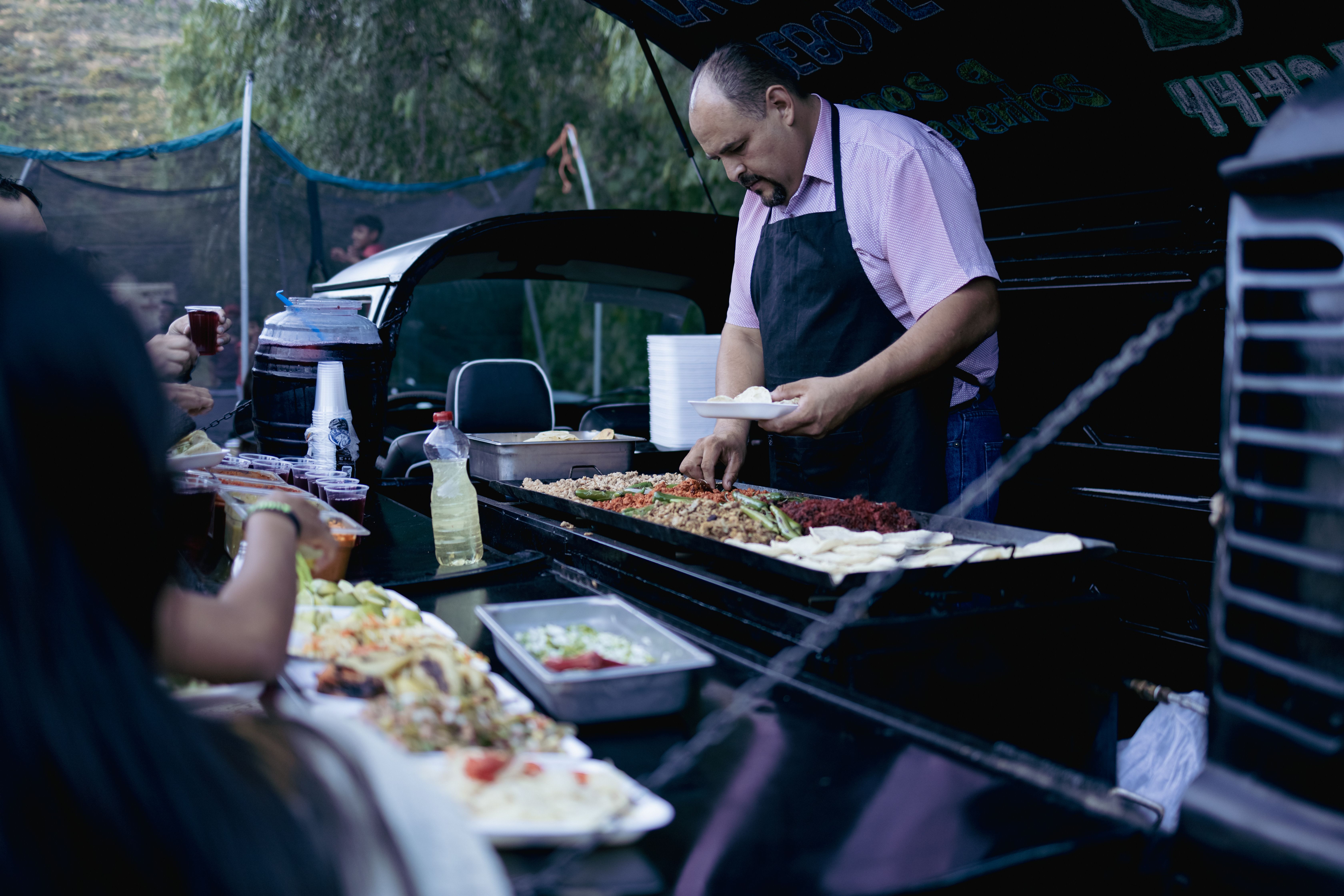
Securing a pitch at any popular music festival is highly competitive, making it challenging for new entrants. Vendor applications are frequently oversubscribed, so offering something different with competitive pricing can help with selection. What are the factors that influence the success of serving food and beverages at a music festival to achieve great profit margins.
The ability to generate favorable profit margins from operating a food or beverage pitch space at a music festival is a complex process. Vendors need to consider all the fixed and variable costs involved, the prices to charge, menu options to offer combined with minimal waste and high throughput. For any new entrants to the sector how can they plan and forecast to make the most of securing a pitch space at a music festival.
Food and Beverage Vendors for Music Festivals.
The provision of food and beverages on a festival site is an essential part of the infrastructure with events running for several days and catering for between five and fifty thousand hungry, thirty festival-goers. In Europe and North America, the vendors servicing music festivals is a thriving competitive market where experienced operators generate attractive profit margins. Vendors must constantly innovate with new menu options whilst keeping prices competitive and satisfying festival organisers during the selection process. This makes it difficult for new entrants to get into the industry, and many start at smaller events with lower attendance numbers. This allows them to build experience on managing throughput volumes, queue management, plus cost control, and a better understanding of the logistics involved. For vendors coming from a fixed bricks and mortar establishment, the transfer to a mobile operation can be easier than a new vendor starting from scratch.
Application and Approval.
The largest music festivals can have hundreds of pitch spaces available for vendors, and the selection process by organisers can be brutal. Despite the high pitch fees often charged, the demand is always higher than the space available. This leads to organisers being very selective about the vendors they choose with priorities going to those with proven experience. In addition, organisers are looking for a variety of menu options at different price points to cater for the different festival-goer tastes and budgets. They will usually divide the vendor pitch spaces into zones which focus on food, beverages, alcoholic drinks, and merchandise, for example.
Menu and Drink Offerings.
The profit margins achieved by vendors can sometimes be determined by the efficiency of production where the offering feels premium but is operationally simple to produce. Keeping menu options simple allows the vendors to focus on several specialty dishes rather than producing a comprehensive menu that requires time-consuming preparation. Many successful vendors focus on a single offering perhaps with several variations which keep the entire process simple. Guidance suggests that the ideal preparation time should not exceed 3 or 4 minutes, and this needs to be balanced with queue management. Festival-goers can make faster decisions about a dish if the options are limited, which cuts down on ordering time. This can be further enhanced by using contactless ordering where a dish is ordered through an app. For vendors who are offering both food and beverages, the higher profit margins can often come from the drinks on offer. Having readily available drinks in addition to water can be particularly popular and may include speciality lemonade, iced tea, iced coffee and premium soft drinks, all of which have high margins combined with fast throughput. The same is possible for pre-prepared dessert options like brownies, cookies, doughnuts, and waffles, for example.
Costs, Prices and Margins.
The economics for festival vendors need to be appreciated because the gross profit margin is not the same as net profitability. Vendors need to take account of pitch fees, staff costs, electricity and water supply infrastructure, ingredients, packaging and transport as well as revenue share deals with organisers which can be an additional 10 - 30% of gross sales. This is why it is vital to get the menu offering right; a $12 product serviced in under a minute can be more profitable than an $18 product that takes five minutes to deliver. For a vendor entering the music festival sector, they should assess other factors, not just the obvious costs like pitch fees, labour and ingredient costs. They need to establish with organisers what the proposed festival-goer attendance will be and how many competing vendors will be booked in the same food or drink categories. In addition, what restrictions are there about beverage supply because other vendors may have exclusive deals for coffee, for example. Revenue sharing can be negotiable, but if organisers demand a high percentage of gross sales, the vendor could be left with almost no margin at the end of the event. The food and beverage categories that regularly feature having the highest profit margins (up to 80% gross) include speciality drinks, coffee, ice cream, loaded fries and tacos or wraps.
For festival organisers planning their next event using a software management platform like Festival Pro gives them all the functionality they need manage every aspect of their event logistics. The guys who are responsible for this software have been in the front line of event management for many years and the features are built from that experience and are performance artists themselves. The Festival Pro platform is easy to use and has comprehensive features with specific modules for managing artists, contractors, venues/stages, vendors, volunteers, sponsors, guestlists, ticketing, site planning, cashless payments and contactless ordering.
Image by Juan Carlos Duran via Pexels
<< Back to articles
Contact us
Get in touch to discuss your requirements.
US: +1 424 485 0220 (USA)
UK: +44 207 060 2666 (United Kingdom)
AU: +61 (2) 8357 0793 (Australia)
NZ: +64 (0)9887 8005 (New Zealand)